
ASTM A193 Grade B8M,
Class 1 Bolts (SS 316)
Manufactured almost exclusively from AISI 316 or 316L stainless steel, the B8M designation signifies a profound upgrade in chemical resilience over its Type 304 (Grade B8) counterpart. This superiority is primarily achieved through the controlled metallurgical addition of molybdenum to the alloy matrix, fundamentally altering the fastener's ability to withstand chloride-induced degradation.
The "Class 1" designation dictates the precise thermomechanical processing the steel undergoes. Specifically, it is subjected to a rigorous carbide solution treatment (solution annealing) without any subsequent strain hardening or cold working. This unique processing yields unparalleled internal ductility and extreme temperature stability capable of operating from cryogenic depths down to -450°F (-268°C) up to blistering environments reaching 1500°F (815°C).
Chemical Composition & Atomic Alloy Mechanics
The defining characteristic that separates Grade B8M (Type 316) from standard Grade B8 (Type 304) is the intentional addition of Molybdenum (2.00% to 3.00%). Molybdenum drastically enhances the resilience of the passive chromium-oxide layer when exposed to aggressive halide ions, protecting against localized pitting and crevice corrosion in seawater and complex chemical processing streams.
| Element | Composition Limit (%) | Allowed Variation (%) |
|---|---|---|
| Carbon (C) | 0.08 max | + 0.01 |
| Manganese (Mn) | 2.00 max | + 0.04 |
| Phosphorus (P) | 0.045 max | + 0.01 |
| Sulfur (S) | 0.030 max | + 0.005 |
| Silicon (Si) | 1.00 max | + 0.05 |
| Chromium (Cr) | 16.00 – 18.00 | +/- 0.20 |
| Nickel (Ni) | 10.00 – 14.00 | +/- 0.15 |
| Molybdenum (Mo) | 2.00 – 3.00 | +/- 0.10 |
Mechanical Properties & Yield Dynamics
Because Class 1 fasteners are solely subjected to solution annealing, their mechanical properties reflect the natural, highly ductile state of pure Type 316 stainless steel. The exceptionally high elongation minimum (30%) indicates that a B8M Class 1 bolt will stretch and deform plastically under catastrophic thermal expansion or overpressure, providing a critical fail-safe mechanism before fracture.
| Mechanical Property | Class 1 Requirement (All Diameters) |
|---|---|
| Minimum Tensile Strength | 75 ksi (515 MPa) |
| Minimum Yield Strength (0.2% offset) | 30 ksi (205 MPa) |
| Minimum Elongation in 4D | 30% |
| Minimum Reduction of Area | 50% |
| Maximum Hardness | 223 HBW or 96 HRB |
The Paradigm Shift: Class 1 vs. Class 2 Engineering Mechanics
While Class 1 fasteners achieve their strength through stable annealing, Class 2 fasteners undergo intense strain hardening (cold working). This artificial strengthening dramatically increases yield strength, but the compressive forces cannot penetrate deeply into the core of larger-diameter bars, leading to a sliding scale of minimum strength requirements based on size.
| Nominal Size Diameter | Class 1 Yield (ksi) | Class 1 Tensile (ksi) | Class 2 Yield (ksi) | Class 2 Tensile (ksi) |
|---|---|---|---|---|
| Up to 3/4" | 30 | 75 | 95 | 110 |
| 7/8" to 1" | 30 | 75 | 80 | 100 |
| 1-1/8" to 1-1/4" | 30 | 75 | 65 | 95 |
| 1-3/8" to 1-1/2" | 30 | 75 | 50 | 90 |
Thermal Envelope & Advanced Environmental Resistance
The vast thermodynamic stability of ASTM A193 Grade B8M Class 1 is a primary driver for its widespread specification in global energy infrastructure.
- Cryogenic Toughness (-450°F / -268°C): The face-centered cubic lattice avoids the ductile-to-brittle transition. B8M maintains exceptionally high impact toughness and avoids shattering at sub-zero temperatures, making it a premier choice for Liquid Natural Gas (LNG) and liquid oxygen storage.
- High-Temperature Endurance (1500°F / 815°C): The alloy is engineered to operate continuously in blistering thermal environments without severe creep deformation or oxidative scaling, securing high-pressure boiler systems and superheated chemical reactors.
- Marine & Chloride Environments: The molybdenum addition guarantees near immunity to coastal brackish water and heavily oxygenated seawater, providing a 15 to 25+ year service life in offshore oil rigs compared to the 3-5 year lifespan of galvanized carbon steel.
Mating Hardware & Galling Prevention
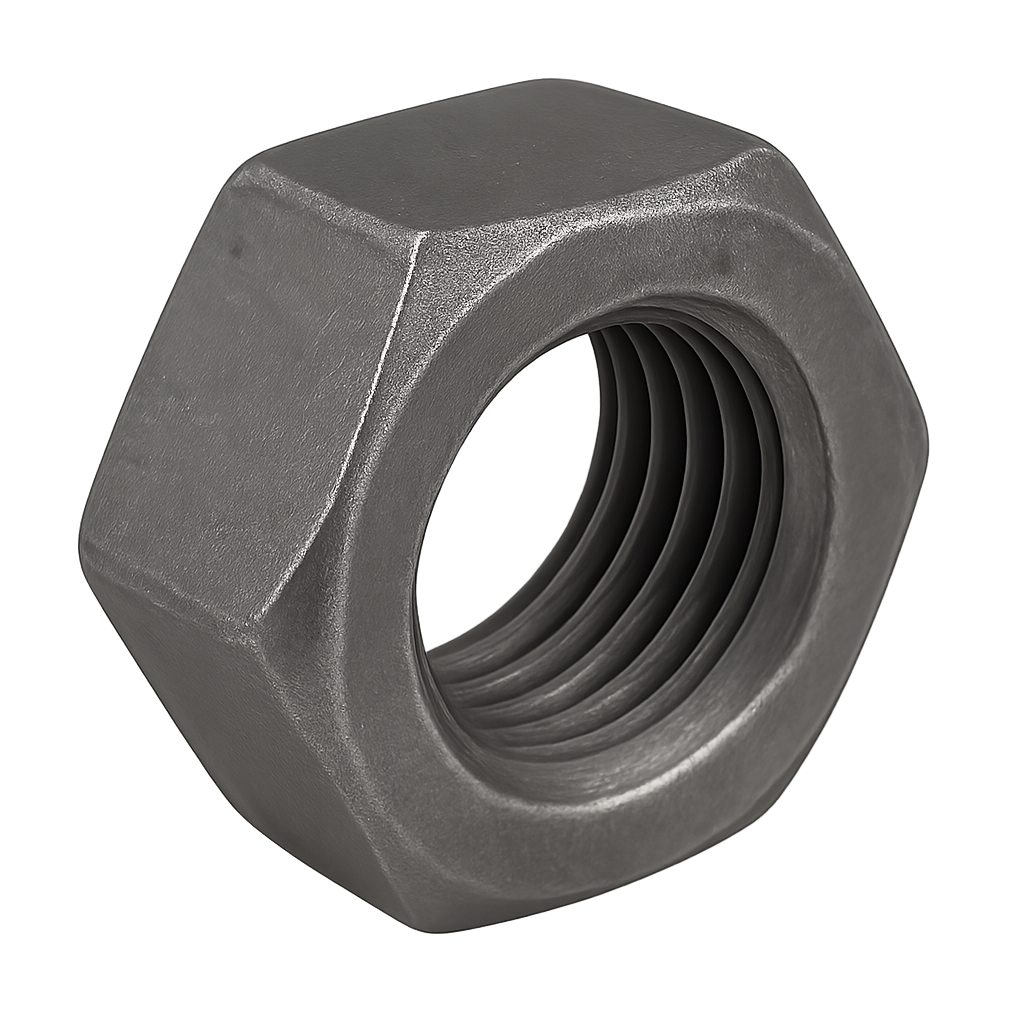
The globally mandated mating hardware for any ASTM A193 B8M bolt is the ASTM A194 Grade 8M heavy hex nut. Forged from identical AISI 316 stainless steel, it guarantees absolute metallurgical and electrochemical compatibility, actively preventing destructive galvanic corrosion. To combat thread galling (cold welding) during assembly, rigorous application of specialized anti-seize lubricants or baked-on PTFE/Xylan fluoropolymer coatings is heavily relied upon.
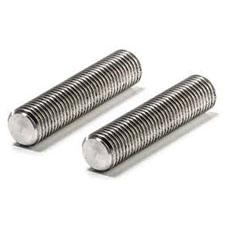
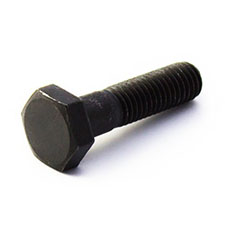
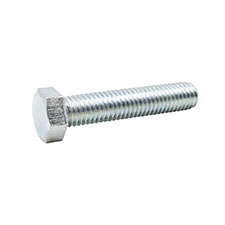
Grade B8M Class 1 Hardware Formats
We precision manufacture and export EN 10204 3.1 certified ASTM A193 Grade B8M hardware, explicitly marked for Class 1 absolute traceability.
Frequently Asked Questions (FAQs)
Why is B8M specified over standard B8 for offshore applications?
The B8M matrix includes the critical addition of 2.00% to 3.00% molybdenum. Standard B8 (Type 304 stainless) relies solely on chromium, which is rapidly compromised by chloride ions present in saltwater, leading to aggressive localized pitting and rapid structural failure. The molybdenum in B8M stabilizes the passive chromium oxide layer against these specific halide attacks, granting it near immunity to marine environments.
What physically separates a Class 1 fastener from a Class 2 fastener?
The difference lies entirely in the post-forging thermomechanical heat treatment. A Class 1 fastener undergoes only a carbide solution treatment (annealing), leaving the internal metallic structure highly ductile and relaxed, with a yield strength of 30 ksi. A Class 2 fastener takes this annealed bolt and subjects it to severe, compressive cold working (strain hardening), increasing yield strength up to 95 ksi but sacrificing ductility and high-temperature stability.
Why must Class 1 bolts be used in high-temperature pipelines instead of the stronger Class 2?
When a Class 2 bolt is exposed to operational temperatures exceeding 1000°F (538°C), the intense thermal energy allows the atoms to kinetically rearrange, erasing the strengthening atomic dislocations created by cold working. The Class 2 bolt will autonomously revert to the weaker Class 1 strength parameters, resulting in blown gaskets and joint failure. Class 1 bolts, being fully annealed, safely maintain their structural integrity up to 1500°F (815°C).
What is the required mating nut for an A193 B8M stud, and why is it oversized?
The mandatory mating hardware is the ASTM A194 Grade 8M heavy hex nut. It must be utilized to maintain identical metallurgy (Type 316 stainless) across the joint, completely preventing destructive galvanic corrosion. The 'heavy hex' dimensions are thicker and wider than standard nuts, spreading clamping loads to eliminate the risk of internal thread stripping during heavy tensioning.
How do field inspectors verify they are holding a Class 1 bolt and not a Class 2 bolt?
A Class 1 bolt will be permanently forged or stamped on its head simply with the grade symbol 'B8M', alongside the manufacturer's identifying code. A strain-hardened Class 2 variant will be distinctly marked with the letters 'SH' (reading 'B8MSH'), and the entire grade mark will feature a solid underline beneath it.