
Military Fasteners Manufacturer — Categories & Specifications
As a military fasteners manufacturer serving customers in 40+ countries, Ananka Fasteners supplies MIL-SPEC, NAS, MS, and Federal (FF) hardware by product category, base material, or exact specification number — every part manufactured with certified alloys, controlled thread classes, and complete lot traceability.
What are military fasteners? Military fasteners are bolts, nuts, screws, washers, studs, pins, and rivets manufactured to a governing MIL-SPEC, MS (Military Standard), NAS (National Aerospace Standard), or Federal (FF) specification — rather than a generic commercial standard — with certified base materials, Class 3A/3B thread tolerances, and full lot traceability for use in aerospace, naval, and defense equipment. As a military fasteners manufacturer, Ananka produces this hardware to whichever standard a customer's drawing calls out.
Unlike standard commercial hardware, fasteners supplied by our military fasteners manufacturer team are engineered to survive extreme stress, vibration, temperature fluctuations, and corrosive environments. Every component is meticulously documented for complete material traceability from raw alloy to final installation.
MS (Military Standard)
Governs the physical properties, dimensions, and rigorous testing requirements a fastener must pass to be approved for defense applications.
MIL-SPEC
Short for "Military Specification." Defines the exact manufacturing processes, coatings, and acceptable base materials required for extreme durability.
NAS & AN Standards
NAS hardware is built for high-strength aerospace loads. AN (Army-Navy) is a foundational standard heavily utilized in aviation.
Military Fasteners Manufacturer — Core Defense Categories
Nine core hardware categories cover the vast majority of aerospace and defense assembly needs — from structural bolts to blind-area nut plates.
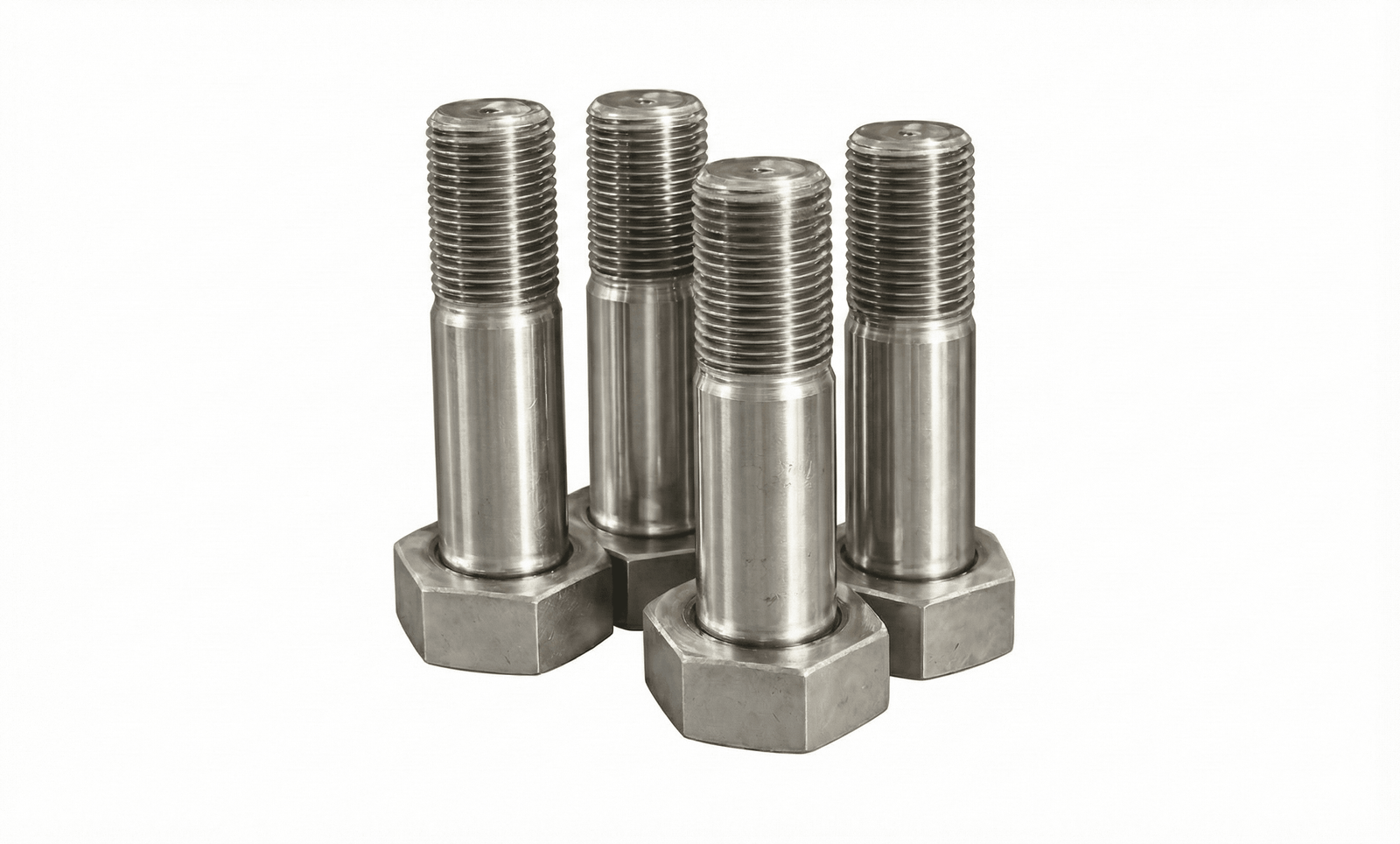
Military Bolts
Designed to handle severe shear and tensile loads in structural aerospace and defense assemblies.
Explore Bolts →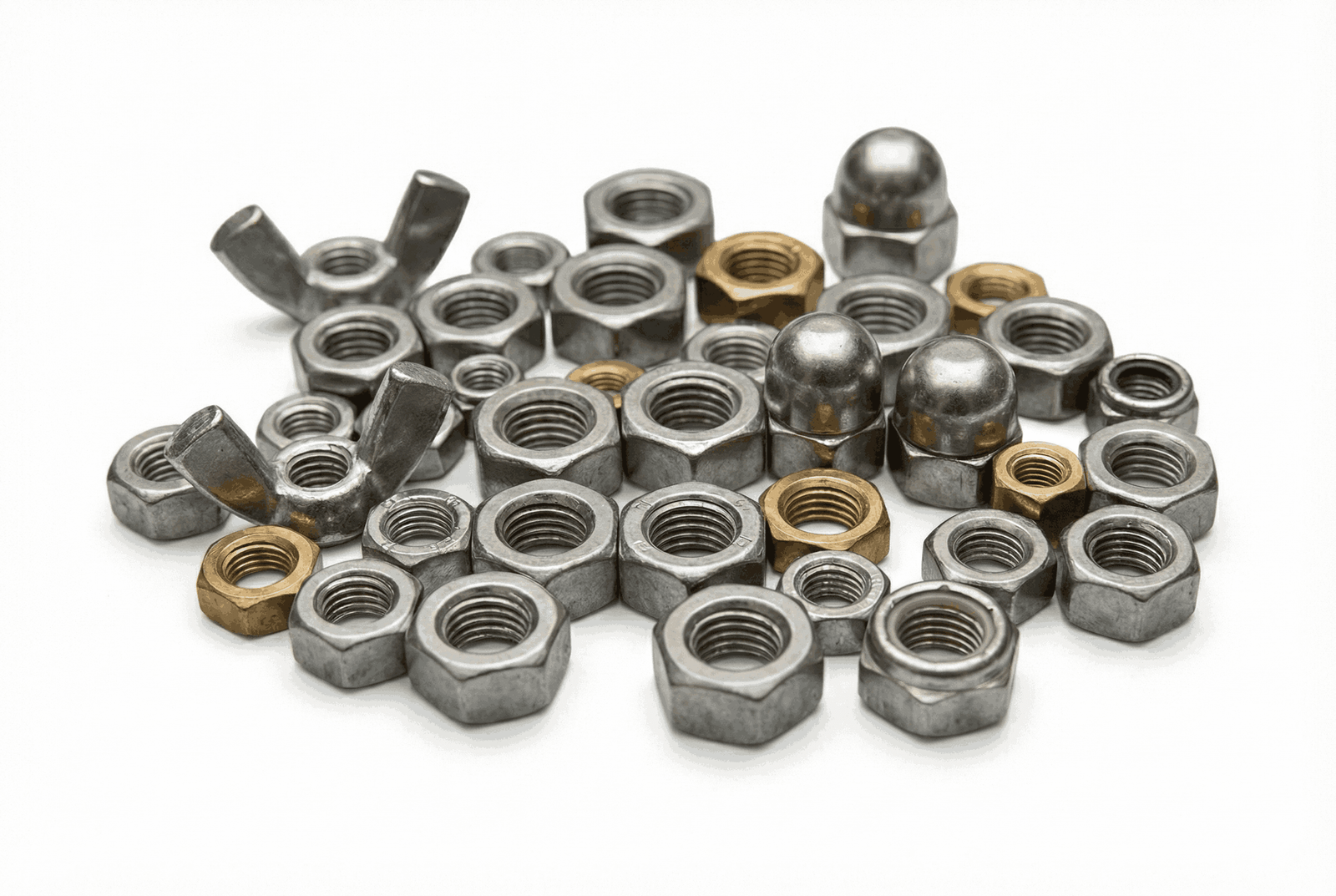
Military Nuts
Mating fasteners engineered with self-locking mechanisms to prevent loosening under heavy vibration.
Explore Nuts →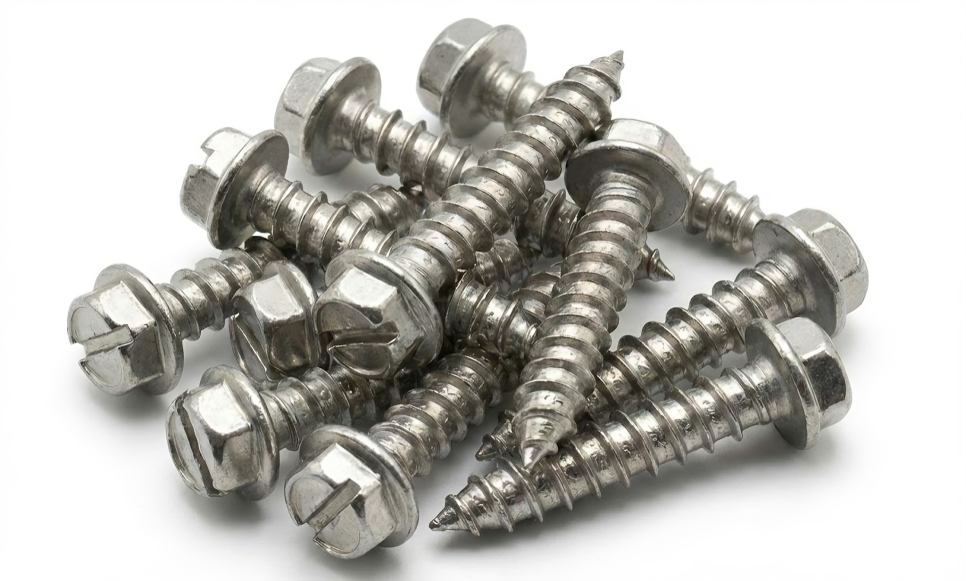
Military Screws
High-precision externally threaded fasteners for tapped holes, electronics, or radar housing applications.
Explore Screws →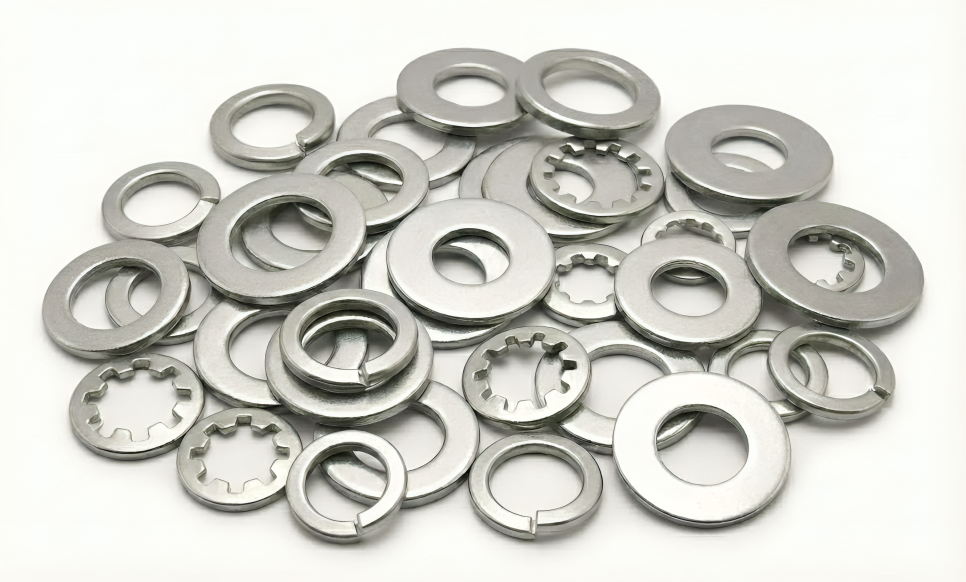
Military Washers
Critical components used to distribute heavy loads, prevent surface damage, and provide tension.
Explore Washers →
Military Stud Bolts
Continuous thread and double-end studs primarily used in naval high-pressure flanges and engine manifolds.
Explore Studs →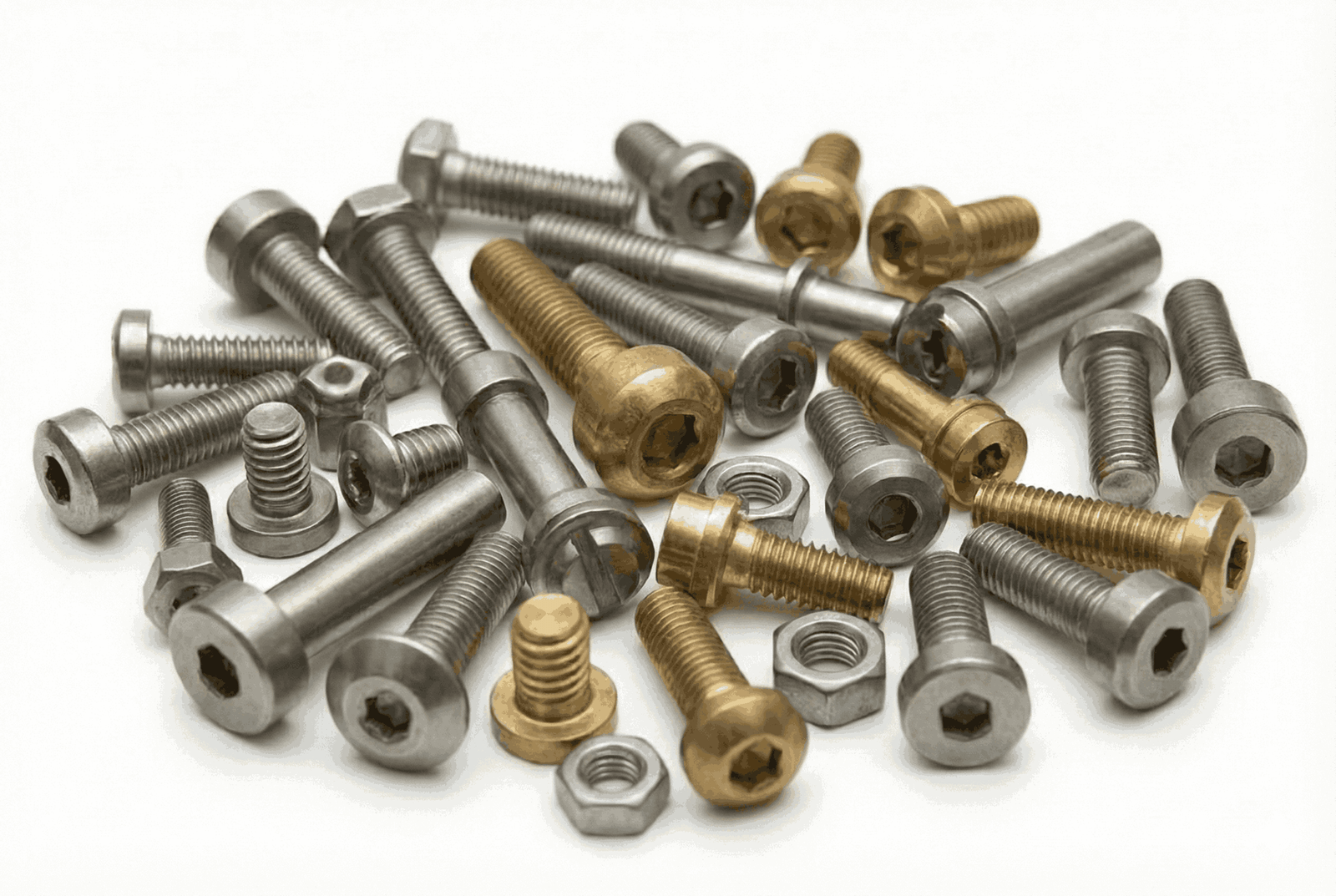
Military Pins
Used to precisely align components, lock assemblies, or act as dedicated quick-release shear fasteners.
Explore Pins →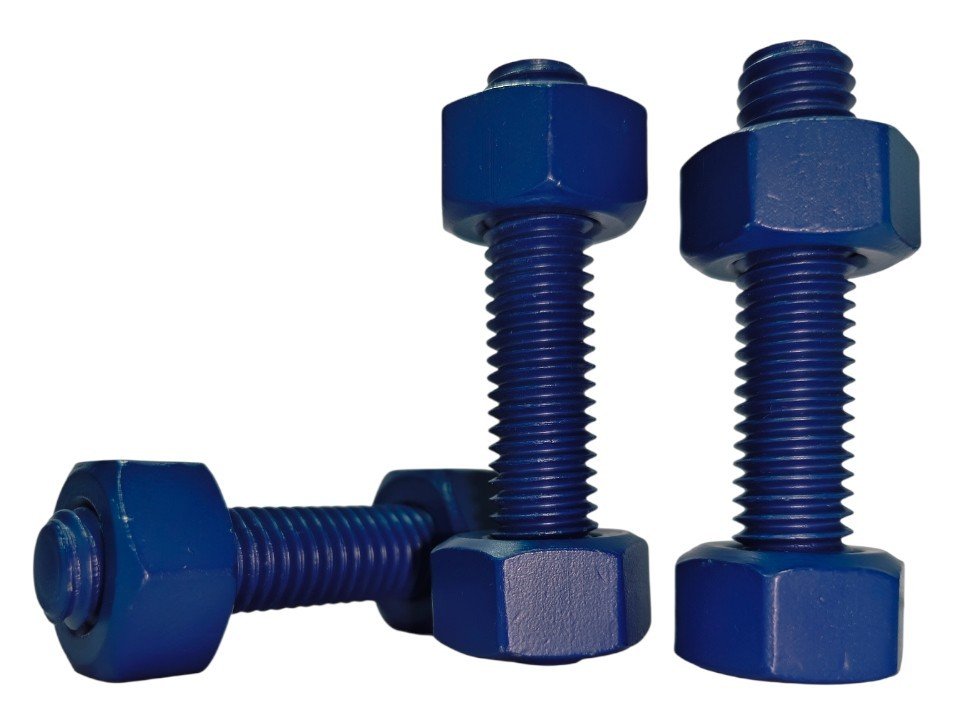
Military Rivets
Permanent mechanical fasteners essential for aircraft skin, aerodynamics, and heavy structural panel joining.
Explore Rivets →
Socket Products
High-strength socket head cap screws engineered for compact spaces requiring high tightening torques.
Explore Sockets →
Military Nut Plates
Anchor nuts permanently attached to structures, allowing bolt assembly in blind or inaccessible areas.
Explore Nut Plates →Military Fastener Materials
Base material selection is driven by temperature, corrosion exposure, and strength-to-weight requirements — here are the alloys we work with most.
Inconel
Extreme heat & corrosion resistance. Maintains strength up to 2000°F. Used in jet engines.
Monel
Impervious to rapidly flowing seawater and hydrofluoric acid. Used in submarine hulls.
Titanium
Highest strength-to-weight ratio, exceptional fatigue resistance. Used in tactical aircraft.
Alloy Steel
Extremely high tensile and yield strength after heat treatment. Used in heavy vehicles.
17-4PH Stainless
High strength coupled with excellent corrosion resistance. Used in radar housings.
A286
Excellent strength and oxidation resistance up to 1300°F. Used in high-temp exhausts.
MIL Specifications & Standards
Our manufacturing facilities comply with active and legacy MIL-SPEC standards, ensuring interchangeable, reliable components. Search or browse by category below.
Aerospace & Aviation (NAS / AN)
Modern aerospace hardware developed and maintained by the Aerospace Industries Association (AIA), covering flat washers, precision bolts, self-locking nuts, and fastener test methods used across commercial and military aircraft.
Naval & Heavy Defense (MIL / MS)
High-reliability hardware for submarine, shipboard, and heavy structural applications — including studs, self-locking Monel nuts, self-locking thread elements, and high-strength shear bolts.
General Hardware & Testing
Legacy and current specifications covering self-locking nuts, thread inserts, non-magnetic fasteners, and self-locking fastener elements — several superseded by the aerospace/naval standards above.
Federal Specifications (FF)
General Services Administration specifications covering bolts, nuts, cap and machine screws, setscrews, cotter pins, and washers — several remain actively revised today, including FF-S-86 and FF-N-836.
Compliance & Sourcing References
As a military fasteners manufacturer, we encourage buyers to verify governing specifications and procurement history through official government and industry sources.
Free MIL-SPEC and Federal Specification text for most standards listed above is available through the Defense Logistics Agency's ASSIST QuickSearch portal. NSN cross-references and procurement history can be checked via DLA DIBBS. AIA-published NAS documents are distributed through authorized services such as IHS Markit. DFARS specialty metals requirements can be reviewed directly at acquisition.gov/dfars. As a military fasteners manufacturer, Ananka Fasteners produces to the current active revision of whichever standard your drawing calls out, and supplies full EN 10204 3.1 Mill Test Certification with every shipment worldwide.
Frequently Asked Questions
What does DFARS compliant mean?
DFARS (Defense Federal Acquisition Regulation Supplement) compliance requires that specialty metals used in defense hardware must be melted or produced in the United States or a qualifying country, protecting the military supply chain.
What is the difference between MS, NAS, and MIL-SPEC?
MIL-SPEC (Military Specifications) dictate exact physical characteristics and testing. MS (Military Standards) detail the dimensional standards. NAS (National Aerospace Standards) are state-of-the-art standards developed by the aerospace industry, often superseding older MS standards for higher performance.
What's the difference between a Federal Specification (FF) and a Military Specification (MIL)?
Federal Specifications (prefixed "FF") are issued by the General Services Administration for use across all federal agencies, covering general-purpose hardware like screws, nuts, and washers. Military Specifications (prefixed "MIL") are issued by the Department of Defense specifically for defense applications and often carry additional testing, material, and reliability requirements beyond the federal baseline.
What is full lot traceability?
It means every fastener is assigned a unique lot number that traces back to the specific heat of raw material, the manufacturing date, heat treatment batch, and testing results, ensuring absolute accountability.
What thread classes are used in military fasteners?
Military and aerospace fasteners typically utilize Class 3A (external) and 3B (internal) threads, which provide a tighter fit than commercial Class 2 threads, ensuring high resistance to loosening under vibration.
Do you provide Mill Test Reports (MTR)?
Yes, EN 10204 3.1 Mill Test Certificates detailing chemical composition, mechanical properties, and heat treatment are provided with every defense fastener shipment.
Which countries does Ananka export military fasteners to?
As a military fasteners manufacturer, Ananka ships to customers across 40+ countries in the Oil & Gas, Power, Nuclear, Marine, Aerospace, and Defense sectors, with subsidiary support entities in the UK and USA alongside our manufacturing base.
Can't Find the Exact Specification You Need?
As a military fasteners manufacturer, our engineering team sources and manufactures to MIL, NAS, MS, and FF specifications not yet listed here. Send us your drawing or specification number for a fast quotation.
Prefer email? sales@anankafasteners.com
