
ASTM A193 Grade B8MA,
Bolts (316 Solution Treated)
Among the highly specialized grades codified within the ASTM A193 standard, Grade B8MA occupies a unique and critical niche. Fabricated from AISI Type 316 austenitic stainless steel, Grade B8MA is defined not merely by its chemical composition, but by an uncompromising thermal processing requirement: it must undergo a complete carbide solution treatment (annealing) in its fully finished condition.
Deciphering the Nomenclature:
- B8: Austenitic stainless steel (18-8 chromium-nickel base).
- M: Addition of Molybdenum (upgrades to Type 316), granting superior resistance to localized pitting and crevice corrosion in chloride environments.
- A: Carbide solution treatment in the finished condition, placing it under Tensile Class 1A to maximize ductility and erase residual manufacturing stresses.
Chemical Composition & Atomic Metallurgy
The performance envelope of ASTM A193 Grade B8MA is dictated entirely by its elemental composition. The material must be forged from high-grade austenitic stainless steel, specifically conforming to UNS S31600 or S31603 (AISI 316 / 316L). The intentional addition of elements known to cause high-temperature embrittlement—such as Bismuth, Selenium, Tellurium, and Lead—is strictly prohibited.
| Element | Chemical Symbol | Composition Limits (Weight %) |
|---|---|---|
| Carbon | C | 0.08% Maximum |
| Manganese | Mn | 2.00% Maximum |
| Phosphorus | P | 0.045% Maximum |
| Sulfur | S | 0.030% Maximum |
| Silicon | Si | 1.00% Maximum |
| Chromium | Cr | 16.00% – 18.00% |
| Nickel | Ni | 10.00% – 14.00% |
| Molybdenum | Mo | 2.00% – 3.00% |
Metallurgical Mechanics:
- Chromium & Molybdenum: Chromium forms the passive Cr2O3 barrier. Molybdenum fundamentally alters the electrochemistry of this layer, drastically increasing the Pitting Resistance Equivalent Number (PREN) against chloride-ion attack.
- Nickel: Forces the alloy to retain a face-centered cubic (FCC) crystal structure across all temperatures, rendering it non-magnetic, remarkably tough, and highly ductile.
- Carbon Restriction: Capped at 0.08% to minimize the inventory of carbon available to form chromium carbides at high temperatures, effectively preventing sensitization and intergranular corrosion.
Mechanical Properties & Tensile Class 1A
The engineering philosophy behind B8MA is a deliberate pivot away from absolute tensile strength in favor of extreme ductility, fracture toughness, and total immunity to stress corrosion cracking. To achieve this, Grade B8MA is classified under Tensile Class 1A, applying universally to all nominal diameters.
| Mechanical Property | Minimum Requirement | Maximum Allowable Limit |
|---|---|---|
| Ultimate Tensile Strength | 75 ksi (515 MPa) | Not Specified |
| Yield Strength (0.2% Offset) | 30 ksi (205 MPa) | Not Specified |
| Elongation in 4D | 30% | Not Specified |
| Reduction of Area | 50% | Not Specified |
| Brinell Hardness (HBW) | Not Specified | 192 HBW |
| Rockwell Hardness (HRB) | Not Specified | 90 HRB |
While a yield strength of 30 ksi (205 MPa) appears low compared to ferritic steels, it is a calculated design. The low yield and extreme ductility (50% reduction of area) ensure the fastener acts like a rigid spring, yielding and stretching plastically to absorb massive thermal expansion spikes or hydraulic hammer shocks without suffering brittle cleavage fracture.
The "Finished Condition" Imperative & NACE MR0175
When threads are rolled into a stainless steel blank, severe cold-working crushes the crystal lattice, causing strain hardening. While this increases localized strength, it traps massive amounts of residual stress. Grade B8MA eliminates this by mandating that the 1900°F (1040°C) carbide solution treatment (annealing) must be performed after the fastener is 100% dimensionally complete.
This thermal soak allows the crushed crystal lattice to completely recrystallize, erasing every trace of strain hardening and residual stress. The finished fastener exits the quench completely stress-free, maintaining a universally low maximum hardness of 90 HRB.
NACE MR0175 / ISO 15156 Compliance for Sour Gas Service
In environments containing Hydrogen Sulfide (H2S), atomic hydrogen permeates stressed/hardened steel, causing sudden, catastrophic Sulfide Stress Cracking (SSC). To prevent this, NACE MR0175 dictates a maximum hardness of 22 HRC. Because Grade B8MA is solution annealed in the finished condition, its maximum hardness is capped at 90 HRB (approx. 10 HRC)—making it natively and fully compliant for sour gas offshore platforms and critical refineries.
| ASTM Specification | Tensile Class | Heat Treatment Sequence | Min Yield Strength | Max Hardness | NACE MR0175 / Sour Gas Compliant |
|---|---|---|---|---|---|
| Grade B8M | Class 1 | Solution Treated (Threads may be rolled after) | 30 ksi | 223 HBW | Conditionally (Requires specific batch testing) |
| Grade B8MA | Class 1A | Solution Treated in Finished Condition | 30 ksi | 192 HBW / 90 HRB | Yes (Highly Recommended) |
| Grade B8M | Class 2 | Solution Treated & Strain Hardened | 95 ksi* | 321 HBW / 35 HRC | No (Exceeds 22 HRC limit) |
Mating Hardware, Tribology & Assembly Dynamics
ASTM A194 Grade 8MA Nuts
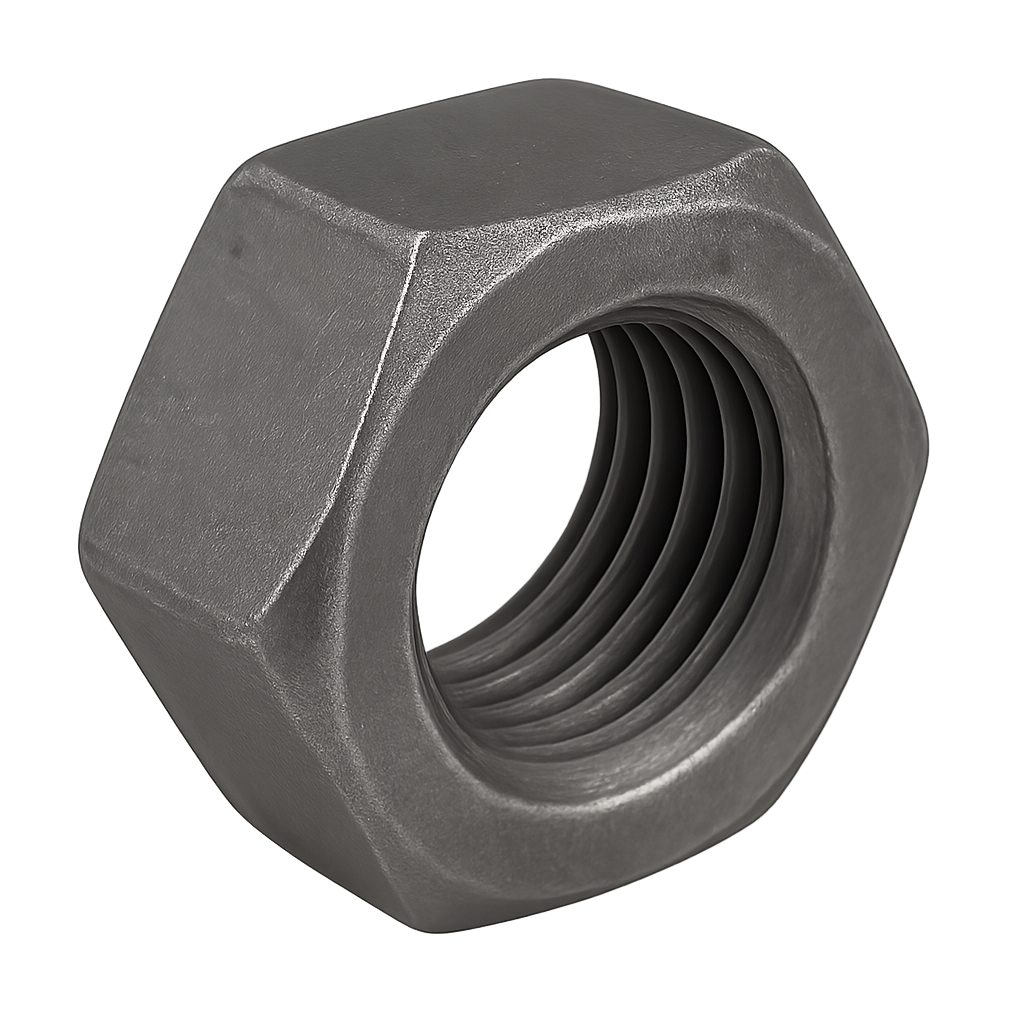
To maintain thermal expansion equilibrium and prevent galvanic corrosion, ASTM A193 Grade B8MA stud bolts must be paired exclusively with ASTM A194 Grade 8MA heavy hex nuts. The "A" suffix ensures the nut is also solution annealed in the finished condition, guaranteeing NACE MR0175 compliance for the entire assembly.
Tribology & Thread Galling
The ultra-soft, highly ductile nature of fully annealed B8MA threads makes them incredibly susceptible to severe adhesive wear (galling or "cold welding") under compressive load. As the nut is torqued, the protective oxide layer ruptures, and the bare metals instantaneously fuse together.
Dry Assembly is Prohibited. A high-quality, extreme-pressure anti-seize lubricant (formulated with molybdenum disulfide, nickel, or PTFE) must be applied prior to torquing. This reduces the K-factor to approximately 0.16, allowing for smooth thread engagement without seizure. Critical Warning: Because B8MA has a low yield strength (30 ksi), using standard Grade B7 torque charts will permanently stretch and destroy the B8MA bolt.
Manufacturing Forms & Dimensions
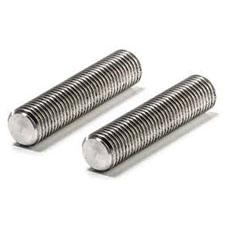
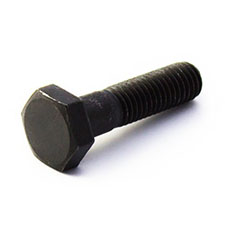
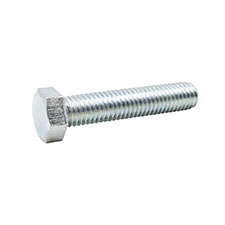
Grade B8MA fasteners are forged into stud bolts, heavy hex bolts, socket head cap screws, and anchor bolts. The 8UN series (8 threads per inch) is the mandated standard for pressure vessels for any bolt diameter exceeding 1 inch.
Surface Finishes: Because the final heat treatment at 1900°F causes an oxide scale, fasteners are either Pickled and Passivated (dull matte-gray finish ideal for pipelines) or Bright Annealed in a vacuum/inert gas furnace (mirror-like finish for sterile pharmaceutical/food environments).
Weight Data (Metric Studs - kg/1000 pcs)
| Metric Size | Length 50mm | Length 80mm | Length 100mm | Length 120mm |
|---|---|---|---|---|
| M10 | 24.41 | 39.05 | 48.82 | 58.57 |
| M12 | 35.94 | 57.50 | 71.88 | 86.25 |
| M16 | 65.68 | 105.08 | 131.35 | 157.63 |
| M20 | - | 165.09 | 206.37 | 247.64 |
| M24 | - | - | 298.25 | 357.90 |
Global Supply Chain & Industrial Applications
The specialized properties of ASTM A193 Grade B8MA—specifically its NACE MR0175 compliance, low hardness, extreme ductility, broad thermal resilience, and molybdenum-driven chloride immunity—make it a premium asset in heavy industry.
- Offshore Oil & Gas: Molybdenum prevents localized pitting from saltwater, while the low-hardness microstructure guarantees total immunity to Sulfide Stress Cracking when sour crude and H2S gases are pumped through Blowout Preventers (BOPs).
- Cryogenic Processing & LNG: The nickel-stabilized FCC lattice prevents low-temperature embrittlement, securing Liquefied Natural Gas terminals operating at temperatures down to -325°F (-198°C).
- Petrochemical Refineries: Utilized extensively in distillation columns and heat exchange networks operating safely up to 1500°F (815°C).
Grade B8MA Hardware Solutions
We precisely machine Class 1A ASTM A193 Grade B8MA bolting, ensuring flawless EN 10204 3.1 certification, finished-condition annealing, and full NACE MR0175 compliance.
Frequently Asked Questions (FAQs)
What is the fundamental engineering difference between ASTM A193 Grade B8M and Grade B8MA?
Both grades are forged from AISI 316 stainless steel. Grade B8M (Class 1) permits threading after heat treatment, introducing localized cold-work hardening. Grade B8MA mandates annealing strictly in the finished condition—after all shaping, machining, and threading is complete—ensuring the fastener is perfectly soft, uniformly annealed, and devoid of any residual stress.
Is ASTM A193 Grade B8MA certified for NACE MR0175 sour gas service?
Yes, it is the premier choice for sour service. NACE MR0175 requires austenitic stainless steels to possess a maximum hardness of 22 HRC to prevent Sulfide Stress Cracking (SSC) upon exposure to Hydrogen Sulfide gas. Because Grade B8MA is solution annealed in the finished condition, its maximum hardness is capped at 90 HRB (approx. 10 HRC), easily clearing NACE protocols.
Why does Grade B8MA have a low minimum yield strength (30 ksi) compared to Grade B7 (105 ksi)?
Grade B7 is a quenched and tempered carbon alloy designed for massive clamping forces. Grade B8MA is an austenitic stainless steel engineered for extreme corrosion resistance and high ductility. The final solution annealing process softens the crystal lattice to eliminate stress corrosion cracking, prioritizing chemical stability over extreme mechanical pre-loads.
Which specific nuts and washers must be paired with a Grade B8MA stud bolt?
To maintain identical coefficients of thermal expansion and prevent galvanic corrosion, ASTM A193 Grade B8MA bolts must be paired exclusively with ASTM A194 Grade 8MA heavy hex nuts. The "A" suffix ensures the nut is also solution annealed in the finished condition. Washers must be manufactured to ASTM A240 TP316 specifications.
Can Grade B8MA bolts survive in cryogenic liquid gas environments?
Yes. Unlike ferritic carbon steels that shatter at extreme sub-zero temperatures, the high nickel content in 316 stainless steel locks the molecular geometry into an FCC lattice, preventing the ductile-to-brittle transition phase. Grade B8MA fasteners retain impact toughness safely down to -325°F (-198°C).
If higher clamping strength is required, can I substitute Class 2 stainless steel bolts for B8MA?
This substitution depends entirely on the chemical environment. Class 2 B8M bolts achieve high strength through deliberate cold working, pushing internal hardness up to 35 HRC. This flagrantly violates the NACE MR0175 22 HRC limit. If the pipeline involves sour gas (H2S), Class 2 bolts cannot be used. You must accommodate the lower yield strength of Class 1A B8MA using larger nominal bolt diameters.